
Program Description
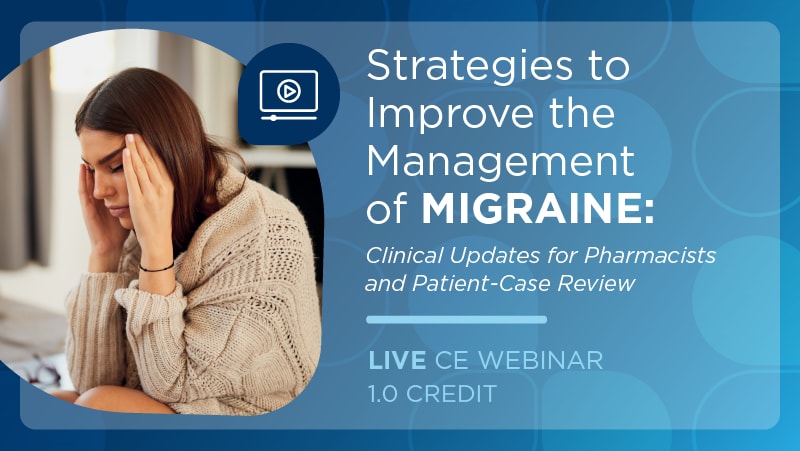
Though it is estimated that nearly 40 million Americans experience migraines, just a small proportion of these individuals utilize prescription medications for migraine treatment. Inadequate acute treatment of migraine can lead to increased disability, anxiety, perceived loss of control, and a substantially increased risk of migraine disease progression. Patients frequently report switching or discontinuing treatment due to perceived lack of efficacy, poor tolerability with the medication, or cost of therapy. It is important that pharmacists recognize the benefits of novel migraine treatment options and recommended goals of treatment outlined in evidence-based guidelines. This activity will review newly approved and emerging agents, including monoclonal antibodies, calcitonin gene-related peptide receptor antagonists, and the 5-HT1F receptor agonist, as well as traditional agents for treatment and management of both acute and chronic migraine. Patient cases will be discussed to highlight important patient-centered counseling points regarding use of medications, lifestyle modifications, and managing comorbidities or adverse effects of therapy.
Target audience: Retail pharmacists
Type of activity: Application
Release date: November 16, 2022
Expiration date: January 16, 2023
Time to complete activity: 1 hour
Fee: Free
Educational Objectives
At the completion of this activity, participants will be able to:
- Explain the epidemiology, pathophysiology, clinical presentation, and health-related quality of life for patients with migraine
- Analyze the latest data on the efficacy, safety, and administration of new and emerging therapies for the management of migraine
- Identify the role of the pharmacist on the health care team in supporting treatment and management of patients with migraine

Kelsey H. Blom, PharmD, BCACP
Neurology Clinical Pharmacy Specialist
Kaiser Permanente Northwest
Portland, Oregon

Pharmacy Times Continuing Education™ is accredited by the Accreditation Council for Pharmacy Education (ACPE) as a provider of continuing pharmacy education. This activity is approved for 1 contact hour (0.1 CEU) under the ACPE universal activity number 0290-0000-22-510-L01-P. The activity is available for CE credit through January 16, 2023.
Instructions for Completing the Activity and Receiving CPE Credit
To receive CPE credit, participants must complete the pretest, review the activity in its entirety, complete the posttest, and complete the online activity evaluation. After successful completion of the online activity evaluation, you can submit your credit to CPE Monitor. You may view your credit within 48 hours at www.mycpemonitor.net. All participants must request credit before the activity expiration date. CE credit will not be issued after this date.
Disclosures
The following contributors have no relevant financial relationships with commercial interests to disclose:
Faculty
Kelsey H. Blom, PharmD, BCACP
Pharmacy Times Continuing Education™ Planning Staff—Jim Palatine, RPh, MBA; Maryjo Dixon, RPh; Rose Namissa-Buszka, PharmD, BCPS, CHCP; Kylie Ferrentino; Susan Pordon; Brianna Winters; and Chloe Taccetta
An anonymous peer reviewer was used as part of content validation and conflict resolution. The peer reviewer has no relevant financial relationships with commercial interests to disclose.
Educational Disclaimer
CPE activities are offered solely for educational purposes and do not constitute any form of professional advice or referral. Discussions concerning drugs, dosages, and procedures may reflect the clinical experience of the author(s) or they may be derived from the professional literature or other sources and may suggest uses that are investigational in nature and not approved labeling or indications. Participants are encouraged to refer to primary references or full prescribing information resources.
For questions about this internet CPE activity, please contact:
[email protected]
Privacy Policy and Terms of Use Information:
www.pharmacytimes.org/terms