
Program Description
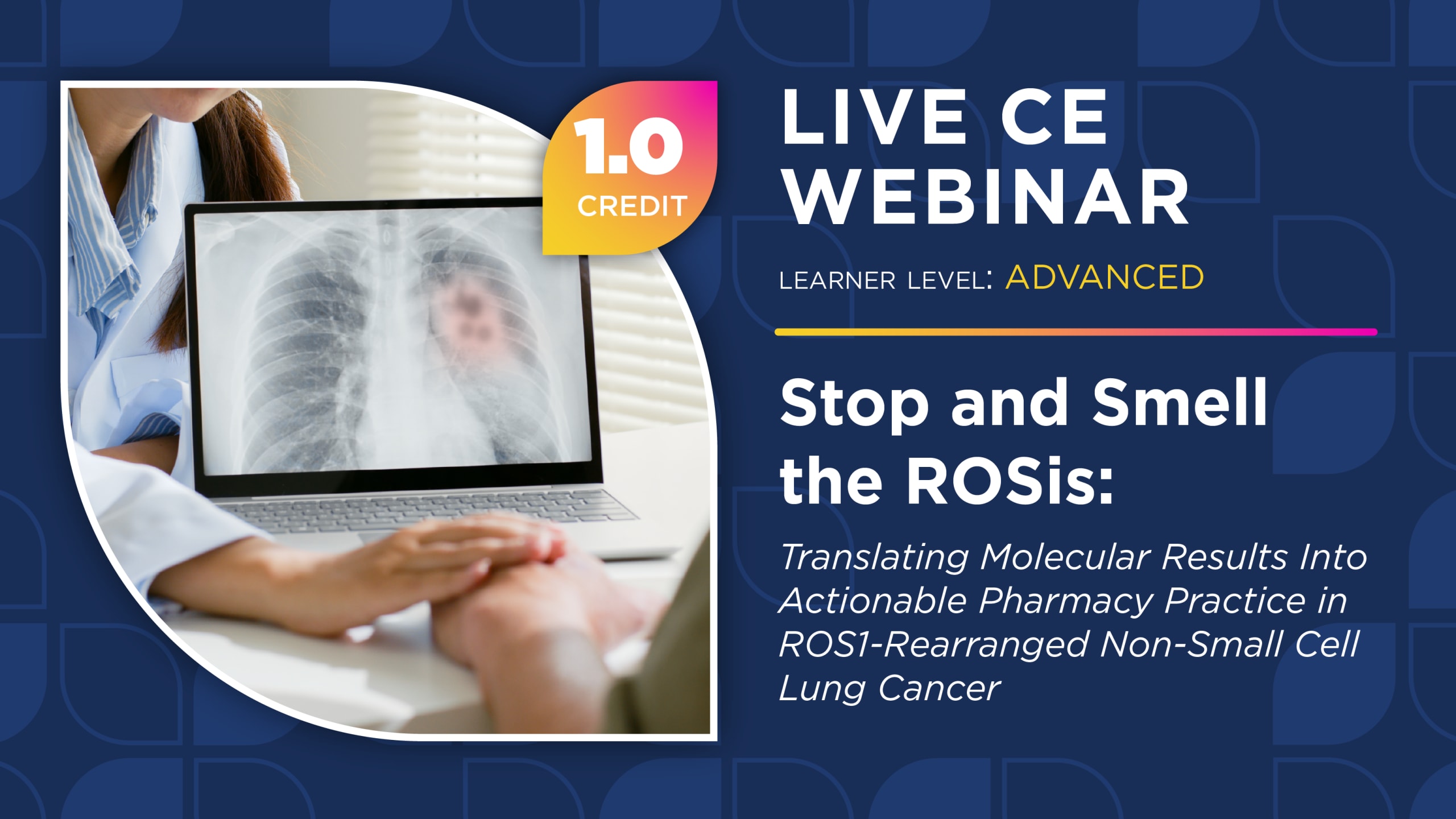
Non–small cell lung cancer (NSCLC) management is increasingly defined by precision medicine, and comprehensive molecular profiling at diagnosis and upon disease progression is the cornerstone for identifying actionable oncogenic drivers and emerging resistance mutations. ROS1 rearrangements represent a well-defined yet uncommon molecular subset, accounting for roughly 1% to 2% of NSCLC cases. The increasing availability of ROS1-targeted therapies requires that oncology pharmacists expertly navigate complex molecular testing and targeted therapy sequencing, particularly for the distinct subset of patients with NSCLC with ROS1 rearrangements. This activity will explore approaches for oncology pharmacists to operationalize next-generation sequencing (NGS) data, focusing on interpreting ROS1 fusions and key resistance mutations to guide optimal treatment selection. A major focus will address the challenge of treatment sequencing, offering comparative analyses of first-generation and next-generation ROS1-targeted therapies based on their efficacy, central nervous system penetration, and resistance coverage in patients with disease progression. The program will also delve into mechanism-based toxicity management, providing insights on interventions and strategies for monitoring and mitigating agent-specific adverse effects to support the delivery of patient counseling pearls and improved care throughout the entire NSCLC treatment continuum. Participants will have the opportunity to examine patient case scenarios and apply evidence-based sequencing strategies.
Target audience: Oncology
pharmacists
Type of activity: Application
Release date: January 22, 2026
Expiration date: March 22, 2026
Time to complete activity: 1.0 hour
Learner level: Advanced
Fee: Free
Educational Objectives
At the completion of this activity, participants will be able to:
- Examine molecular and resistance testing results to support biomarker-directed selection and sequencing of ROS1-targeted therapies throughout the treatment continuum in non–small cell lung cancer (NSCLC)
- Analyze the efficacy, safety, and resistance profiles of available and emerging ROS1-targeted therapies to inform individualized selection and sequencing across the NSCLC continuum
- Employ mechanism-driven strategies to anticipate, monitor, and manage toxicities associated with ROS1-targeted therapies to optimize adherence and sustain long-term treatment benefit
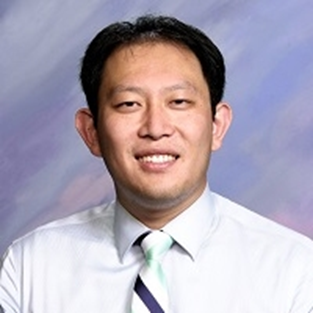
Kevin Chen, PharmD, MS, BCOP, CPP
Assistant Professor of Clinical Education
Division of Practice Advancement and Clinical Education
University of North Carolina Eshelman School of Pharmacy
Chapel Hill, NC

Pharmacy Times Continuing Education™ is accredited by the Accreditation Council for Pharmacy Education (ACPE) as a provider of continuing pharmacy education. This activity is approved for 1.0 contact hour (0.10 CEU) under the ACPE universal activity number [UAN]. The activity is available for CE credit through March 22, 2026.
Instructions for Completing the Activity and Receiving CPE Credit
To receive CPE credit, participants
must complete the pretest, review the activity in its entirety, complete the
posttest, and complete the online activity evaluation. After successful
completion of the online activity evaluation, you can submit your credit to CPE
Monitor. You may view your credit within 48 hours at www.mycpemonitor.net. All
participants must request credit before the activity expiration date. CE credit
will not be issued after this date.
Faculty
Kevin Chen, PharmD, MS, BCOP, CPP , has the following relevant financial relationships with
ineligible companies to disclose:
Consultant: Amgen, Bristol Myers Squibb, Daiichi Sankyo, Johnson & Johnson,
Merck, Pfizer
Pharmacy Times Continuing
Education™ Planning Staff—Jim
Palatine, RPh, MBA; Daphne Davis,
PharmD, BCOP; Victoria Chirdo; Susan Pordon; Brianna Winters; and
Chloe Taccetta have no relevant financial relationships with ineligible
companies to disclose.
All of the relevant financial relationships listed for these individuals have been mitigated.
At least one
anonymous peer reviewer was used as part of content validation and conflict
resolution. The peer reviewer has no relevant financial relationships with
ineligible companies to disclose.
Educational Disclaimer
CPE activities are offered solely for educational purposes and do not
constitute any form of professional advice or referral. Discussions concerning drugs, dosages, and procedures may reflect the clinical experience of the
author(s) or they may be derived from the professional literature or other
sources and may suggest uses that are investigational in nature and not
approved labeling or indications. Participants are encouraged to refer to
primary references or full prescribing information resources.
For questions about this internet CPE activity, please contact:
[email protected]
Privacy Policy and Terms of Use Information:
www.pharmacytimes.org/terms