

Program Description
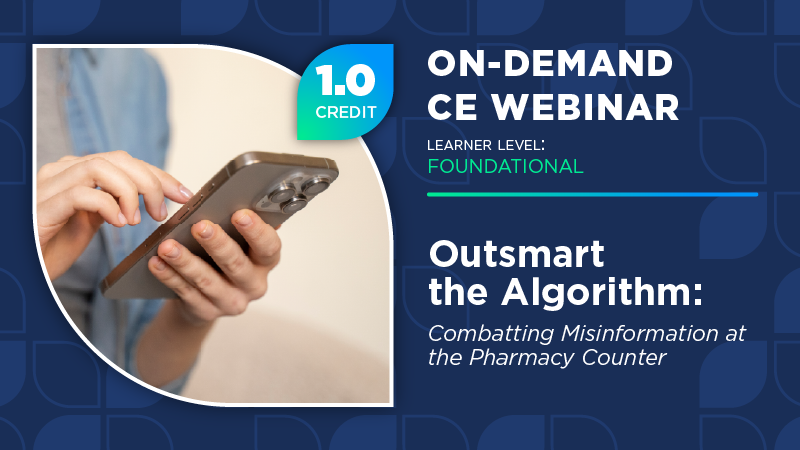
Social media has rapidly emerged as a dominant source of health information,
shaping how patients perceive medications, health care professionals, and
treatment decisions. Algorithm-driven platforms often prioritize engagement
over accuracy, amplifying anecdotal experiences, simplified messaging, and influencer-driven
narratives that contribute to medication consumerism, in which patients request
specific therapies, pursue off-label treatments, or question clinical
recommendations based on online content. These trends have meaningful clinical
and public health implications, including inappropriate medication use, reduced
adherence, erosion of trust in providers, and increased risk of adverse
outcomes. Despite these challenges, pharmacists are uniquely positioned to
address misinformation at the point of care, though doing so requires an
understanding of the psychological drivers of social media engagement,
including confirmation bias and perceived authority, as well as the ability to
navigate conversations without dismissing patient concerns. This session will
examine how social media influences patient perceptions of medications and
health care, evaluate the clinical consequences of medication consumerism
through real-world examples, and provide practical, evidence-based
communication strategies, including motivational interviewing and
patient-centered counseling, to support informed decision-making. Through
case-based application, participants will develop actionable approaches to
identify misinformation, guide evidence-based medication use, and reinforce
trust in an increasingly digital health landscape.
Target audience: Retail Pharmacist, Community Pharmacist
Type of activity: Application
Release date: August 4, 2026
Expiration date: August 4, 2027
Learner level: Foundational
Time to complete activity: 1.0 hour
Fee: Free
Educational Objectives
At the completion of this activity, participants will be able to:
- Analyze factors on social media that shape patient perceptions of medications, health care professionals, and treatment decisions.
- Evaluate the clinical and public health implications of medication consumerism driven by social media content.
- Apply counseling and communication approaches to address misinformation and guide evidence-based medication use.

Megan N. Freeland, PharmD
Owner, Principal Health Literacy Strategist
StockRose Creative, LLC
Atlanta, GA

Pharmacy Times Continuing Education™ is accredited by the Accreditation Council for Pharmacy Education (ACPE) as a provider of continuing pharmacy education. This activity is approved for 1.0 contact hour (0.10 CEU) under the ACPE universal activity number 0290-0000-26-252-H99-P. The activity is available for CE credit through August 4, 2027.
Instructions for Completing the Activity and Receiving CPE Credit
To receive CPE credit, participants must complete the pretest, view the activity in its entirety, complete the posttest, and complete the online activity evaluation. After successful completion of the online activity evaluation, you can submit your credit to CPE Monitor. You may view your credit within 48 hours at www.mycpemonitor.net. All participants must request credit before the activity expiration date. CE credit will not be issued after this date.
Faculty
Megan N. Freeland, PharmD, has the following relevant financial relationships with ineligible companies to disclose: Consultant: UCB
Pharmacy Times Continuing Education™ Planning Staff—Jim Palatine, RPh, MBA; Dipti Desai, PharmD, MBA, CHCP; Jason Christidhis, PharmD, BCOP; Emily Tyler, MHA, PMP; Brianna Winters; and Afton Woodward have no relevant financial relationships with ineligible companies to disclose.
Any relevant financial relationships listed for these individuals have been mitigated.
At least one anonymous peer reviewer was used as part of content validation and conflict resolution. The peer reviewer has no relevant financial relationships with ineligible companies to disclose.
Educational Disclaimer
Continuing professional education activities are offered solely for educational
purposes and do not constitute any form of professional advice or referral.
Discussions concerning drugs, dosages, and procedures may reflect the clinical
experience of the author(s) or be derived from the professional literature or
other sources and may suggest uses that are investigational in nature and not
approved by the labeling or indications. Participants are encouraged to refer
to primary references or full prescribing information resources.
For questions about this internet CPE activity, please contact:
[email protected]
Privacy Policy and Terms of Use Information:
www.pharmacytimes.org/terms
GET STARTED WITH THIS PROGRAM:
Register now to gain access to this program.
Create AccountAlready Registered? Login Here