

Add-on activity
This activity includes patient counseling video vignette.
Program Description
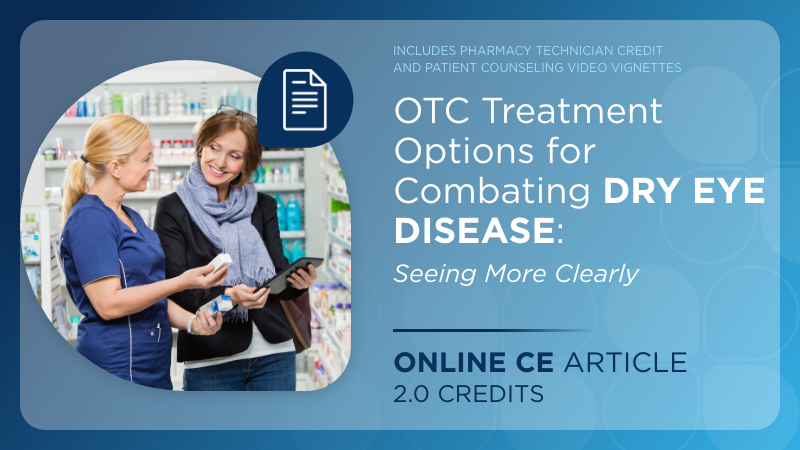
Dry eye disease (DED) is a multifactorial disease of the tears and ocular surface that results in symptoms of discomfort, visual disturbance, and tear film instability with potential damage to the ocular surface. As more adults are using computers, smartphones, or other video display terminals in everyday use, incidence of DED has increased, with more than 16 million Americans receiving a diagnosis of DED and an additional 6 million experiencing symptoms. Treatment for DED involves a step-ladder approach corresponding to disease severity, and key considerations include associated meibomian gland dysfunction, subclinical inflammation of the ocular surface, and/or associated systemic disease. The first-line pharmacotherapy for treating DED consists of over-the-counter (OTC) artificial tear drops, gels, ointments, or lubricants. Several OTC products appear to mimic the different layers of the tear film in order to maintain ocular hydration. Pharmacists can play a crucial role in the treatment of DED by recommending appropriate therapy options, suggesting therapeutic alternatives, or evaluating whether patients may need to discontinue medications that may cause or exacerbate DED. Pharmacy technicians are often at the frontlines, being some of the first individuals to interact with patients with questions about OTC tear drops or gels, and it is important to know when to refer patients to the pharmacist. This activity will highlight available OTC options for management of DED and present strategies pharmacy staff can implement to ensure treatment adherence and symptom management of patients presenting with DED.
Target audience: Pharmacy technicians
Type of activity: Knowledge
Release date: March 15, 2022
Expiration date: March 15, 2023
Time to complete activity: 2.0 hours
Fee: Free
Educational Objectives
At the completion of this activity, the participant will be able to:
- Indicate the symptoms, risk factors, and quality-of-life burden associated with dry eye disease (DED)
- Recall important safety information and the rationale for use of various over-the-counter treatment options, including artificial tear preparations and supplements, that have been shown to be beneficial in patients with DED
- Recognize the role of pharmacy technicians in communicating with patients about DED and when to refer them to the pharmacist for further consultation
Emily M. Ambizas, PharmD, MPH, BCGP
Interim Assistant Dean
Experimental Pharmacy Education
Associate Clinical Professor
St. John’s University
College of Pharmacy and Health Sciences
Queens, New York
Clinical Specialist
Walgreens #17265
Whitestone, New York

Pharmacy Times Continuing Education™ is accredited by the Accreditation Council for Pharmacy Education (ACPE) as a provider of continuing pharmacy education. This activity is approved for 2.0 contact hours (0.20 CEU) under the ACPE universal activity number 0290-0000-22-069-H01-T. The activity is available for CE credit through March 15, 2023.
Instructions for Completing the Activity and Receiving CPE Credit
To receive CPE credit, participants must complete the pretest, read the article in its entirety, complete the posttest, and complete the online activity evaluation. After successful completion of the online activity evaluation, you can submit your credit to CPE Monitor. You may view your credit within 48 hours at www.mycpemonitor.net. All participants must request credit before the activity expiration date. CE credit will not be issued after this date.
Disclosures
The following contributors have no relevant financial relationships with commercial interests to disclose:
Faculty
Emily M. Ambizas, PharmD, MPH, BCGP
Pharmacy Times Continuing Education™ Planning Staff—Jim Palatine, RPh, MBA; Maryjo Dixon, RPh; Michelle C. Carlson, PharmD; Abigail Dill; Susan Pordon; Brianna Winters; and Chloe Taccetta
An anonymous peer reviewer was used as part of content validation and conflict resolution. The peer reviewer has no relevant financial relationships with commercial interests to disclose.
Educational Disclaimer
CPE activities are offered solely for educational purposes and do not constitute any form of professional advice or referral. Discussions concerning drugs, dosages, and procedures may reflect the clinical experience of the author(s) or they may be derived from the professional literature or other sources and may suggest uses that are investigational in nature and not approved labeling or indications. Participants are encouraged to refer to primary references or full prescribing information resources.
For questions about this internet CPE activity, please contact:
[email protected]
Privacy Policy and Terms of Use Information:
www.pharmacytimes.org/terms
GET STARTED WITH THIS PROGRAM:
Register now to gain access to this program.
Create AccountAlready Registered? Login Here