

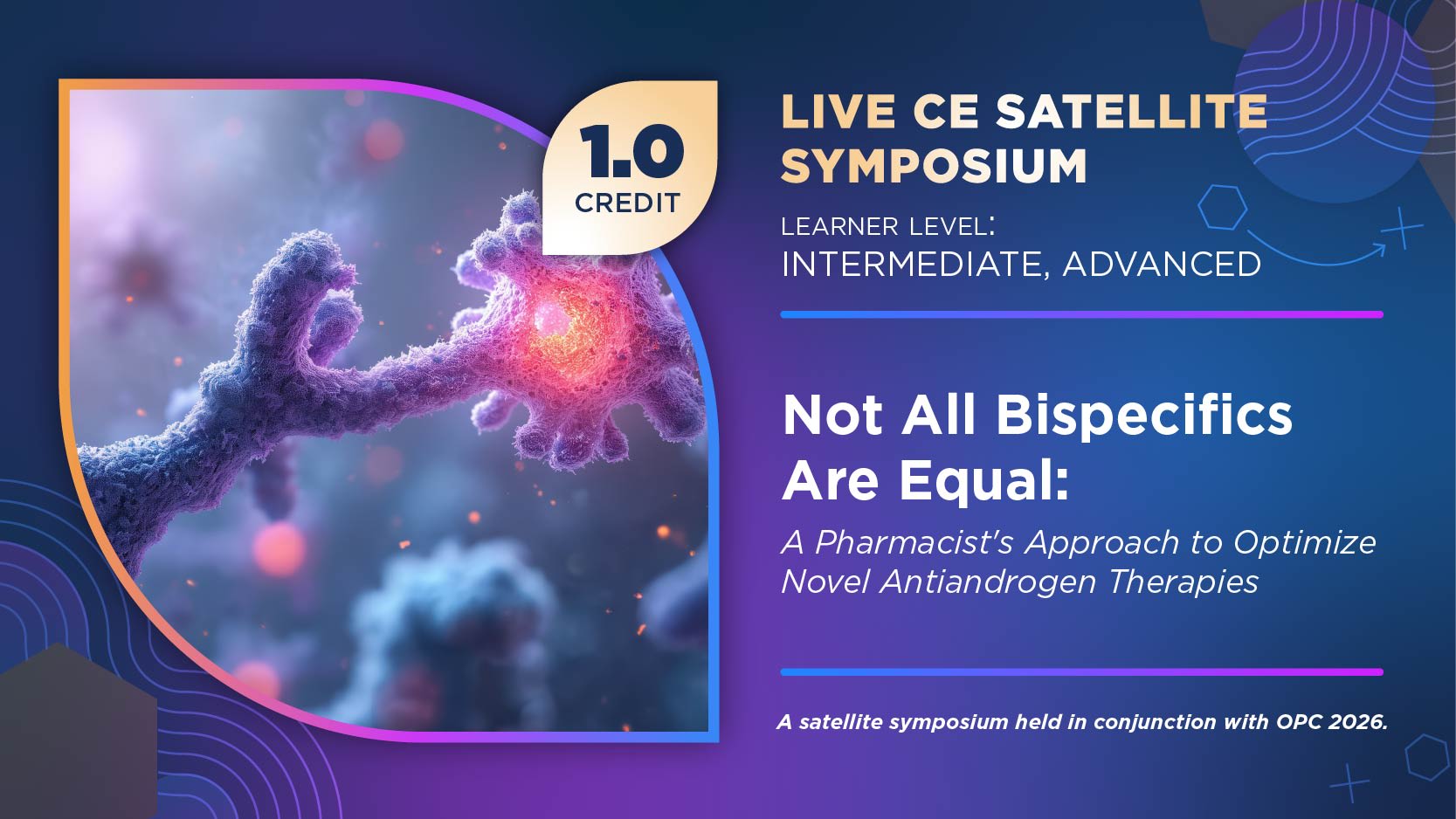
Program Description:
Bispecific antibodies (BsAbs) are a class of immune therapies that are approved for various cancers, initially in hematological malignancies and now in solid tumors. Most currently available BsAbs engage T cells by targeting CD3 and a tumor antigen. Though primarily approved for previously treated patients, their use has moved to front-line settings. As BsAbs approvals expand, their varying mechanisms, toxicity profiles, and monitoring requirements add complexity to treatment decisions. Differences in target selection, structure, and immune engagement affect dosing, toxicity, and patient selection, presenting challenges for oncology pharmacists in clinical decision-making. In community oncology, incorporating BsAbs is crucial for patient access, though logistics and experience may hinder adoption. Additionally, the integration of BsAbs introduces new operational considerations such as complex dosing strategies, monitoring requirements, multidisciplinary coordination, and biomarker-driven patient identification. These factors can create workflow challenges across both academic and community oncology settings as clinical teams adapt to the expanding use of these therapies. Oncology pharmacists play a central role in developing treatment workflows, coordinating care delivery, and supporting patient access. This session reviews strategies for effective BsAb implementation, focusing on patient selection and toxicity management. Speakers will guide participants in translating emerging clinical evidence into implementation strategies that support safe and efficient delivery of BsAbs.
Target audience: Oncology Pharmacist
Type of activity: Application
Release date: June 18, 2026
Expiration date: August 18, 2026
Time to complete activity: 1.0 hour
Learner level: Intermediate, Advanced
Fee: Free
Educational
Objectives:
At the completion of this activity, participants will be able to:
- Differentiate bispecific antibody classes by mechanism and structure to inform dosing approaches, anticipate toxicity profiles, and guide patient selection
- Apply monitoring and supportive care strategies tailored to individual bispecific antibodies to manage treatment-related toxicities
- Optimize clinical workflows to support the safe and effective implementation of individual bispecific antibodies in oncology care settings
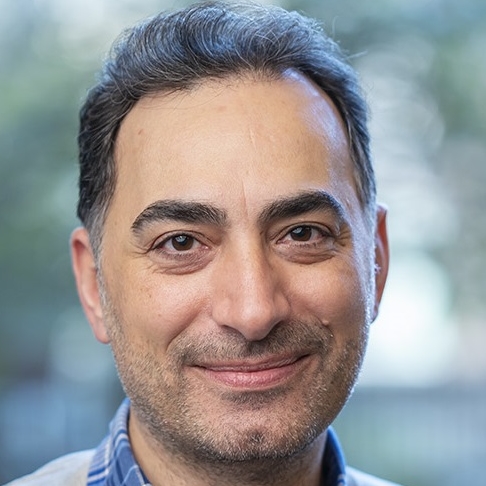
Issam Hamadeh, PharmD, BCPS, BCOP
Clinical Pharmacist Specialist - Multiple Myeloma
Memorial Sloan Kettering Cancer Center
New York City, New York

Brooke Peters, PharmD, BCOP
Clinical Pharmacist
American Oncology Network (AON)
Fort Myers, Florida

Accreditation Information
Pharmacy Times Continuing Education™ is accredited by the Accreditation Council for Pharmacy Education (ACPE) as a provider of continuing pharmacy education. This activity is approved for 1.0 contact hour (0.10 CEU) under the ACPE universal activity number [UAN TBD]. The activity is available for CE credit through August 18, 2026.
Instructions for Completing the Activity and Receiving CPE Credit
To
receive CPE credit, participants must complete the pretest, review the activity in
its entirety, complete the posttest, and complete the online activity
evaluation. After successful completion of the online activity evaluation, you
can submit your credit to CPE Monitor. You may view your credit within 48 hours
at www.mycpemonitor.net. All participants must request credit before the
activity expiration date. CE credit will not be issued after this date.
Disclosures
Brooke Peters, PharmD, BCOP, has the following relevant financial relationships with ineligible companies to disclose:
Consultant: Genentech, Amgen, Regeneron
Speaker's Bureau: Janssen, Pfizer, Amgen, Regeneron
Educational Disclaimer
CPE activities are offered solely for educational purposes and do not
constitute any form of professional advice or referral. Discussions concerning
drugs, dosages, and procedures may reflect the clinical experience of the
author(s) or they may be derived from the professional literature or other
sources and may suggest uses that are investigational in nature and not
approved labeling or indications. Participants are encouraged to refer to
primary references or full prescribing information resources.
For questions about this internet CPE activity, please contact:
Privacy Policy and Terms of Use Information: