

Stream Links:
1pm: https://globalmeet.webcasts.com/starthere.jsp?ei=1696562&tp_key=e235c0b888
8pm: https://globalmeet.webcasts.com/starthere.jsp?ei=1696566&tp_key=0351966b93
Program Description
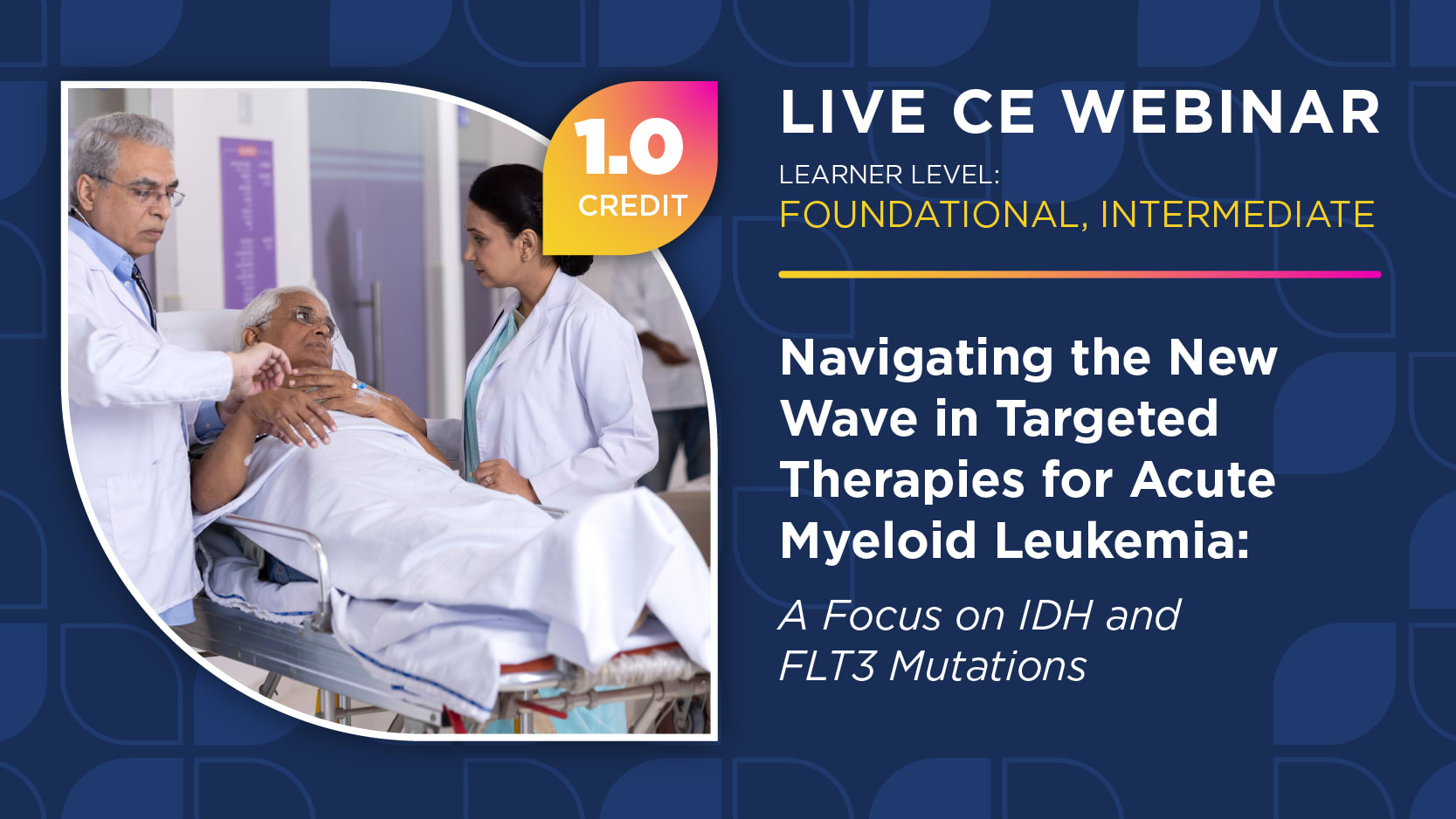
FLT3 and IDH inhibitors have significantly impacted the treatment landscape for patients with acute myeloid leukemia (AML) with high-risk or relapsed/refractory disease. Despite advancements in targeted therapies, AML remains a challenging disease with significant unmet needs, such as the development of resistance to targeted therapies. As part of the multidisciplinary care team, pharmacists have many roles that help patients with cancer achieve optimal clinical outcomes. With the increasing availability of therapies for relapsed/refractory disease, it remains important for oncology pharmacists to be familiar with the indications of emerging agents targeting FLT3 and IDH mutations in AML. Oncology pharmacists must also be familiar with the administration and place of these agents within current treatment guidelines. This webinar will equip oncology pharmacists with educational pearls to implement into their practice to care for patients with AML. Featured will be a discussion of toxicities of therapy, supportive care needs, and therapy management. Considerations for treatment selection and optimization to ensure adherence and prevent and manage adverse effects will be discussed.
Target audience: Oncology Pharmacist
Type of activity: Application
Release date: December 17, 2024
Expiration date: February 17, 2025
Time to complete activity: 1.0 hour
Learner level: Foundational, Intermediate
Fee: Free
Educational Objectives
At the completion of this activity, participants will be able to:
- Differentiate the pharmacology, safety, and clinical pearls of FLT3 and IDH inhibitors for the treatment of acute myeloid leukemia (AML)
- Apply evidence-based treatment plans for patients with AML, considering their clinical, molecular, and patient-specific factors
- Ensure delivery of education for patients and the health care team to mitigate and manage adverse effects and enhance adherence and treatment outcomes for patients with AML

Anthony J. Perissinotti, PharmD, BCOP
Clinical Pharmacist Specialist, Inpatient Hematology
Clinical Team Lead, Hematology/Oncology
University of Michigan Health Michigan Medicine
Ann Arbor, Michigan

Pharmacy Times Continuing Education™ is accredited by the Accreditation Council for Pharmacy Education (ACPE) as a provider of continuing pharmacy education. This activity is approved for 1.0 contact hour (0.10 CEU) under the ACPE universal activity number 0290-0000-24-306-L01-P. The activity is available for CE credit through February 17, 2025.
Instructions for Completing the Activity and Receiving CPE Credit
To receive CPE credit, participants must complete the pretest, review the activity in its entirety, complete the posttest, and complete the online activity evaluation. After successful completion of the online activity evaluation, you can submit your credit to CPE Monitor. You may view your credit within 48 hours at www.mycpemonitor.net. All participants must request credit before the activity expiration date. CE credit will not be issued after this date.
Disclosures
Anthony J. Perissinotti, PharmD, BCOP, has the following financial relationships with commercial interests to disclose:
Consultant: AbbVie Inc, Servier, Syndax Pharmaceuticals, Amgen Inc
The following contributors have no relevant financial relationships with commercial interests to disclose:
Pharmacy Times Continuing Education™ Planning Staff—Jim Palatine, RPh, MBA; Maryjo Dixon, RPh, MBA; Amy L. Morris, PharmD; Aleksandra Thomas; Susan Pordon; Brianna Winters; Chloe Taccetta; and Rebecca Green have no relevant financial relationships with commercial interests to disclose.
Anonymous peer reviewers were used as part of content validation and conflict resolution. The peer reviewers have no relevant financial relationships with commercial interests to disclose.
Educational Disclaimer
CPE activities are offered solely for educational purposes and do not constitute any form of professional advice or referral. Discussions concerning drugs, dosages, and procedures may reflect the clinical experience of the author(s) or they may be derived from the professional literature or other sources and may suggest uses that are investigational in nature and not approved labeling or indications. Participants are encouraged to refer to primary references or full prescribing information resources.
For questions about this internet CPE activity, please contact:
[email protected]
Privacy Policy and Terms of Use Information:
www.pharmacytimes.org/terms