

Stream Link: https://event.arraylive.com/app/login/c9f5b013-e487-4699-aa52-e18315be1c1e/virtualattendee
This activity is jointly provided by the University of Connecticut School of Pharmacy–Storrs and Pharmacy Times Continuing Education™, and is supported by an educational grant from Novartis Pharmaceuticals Corporation
Program Description
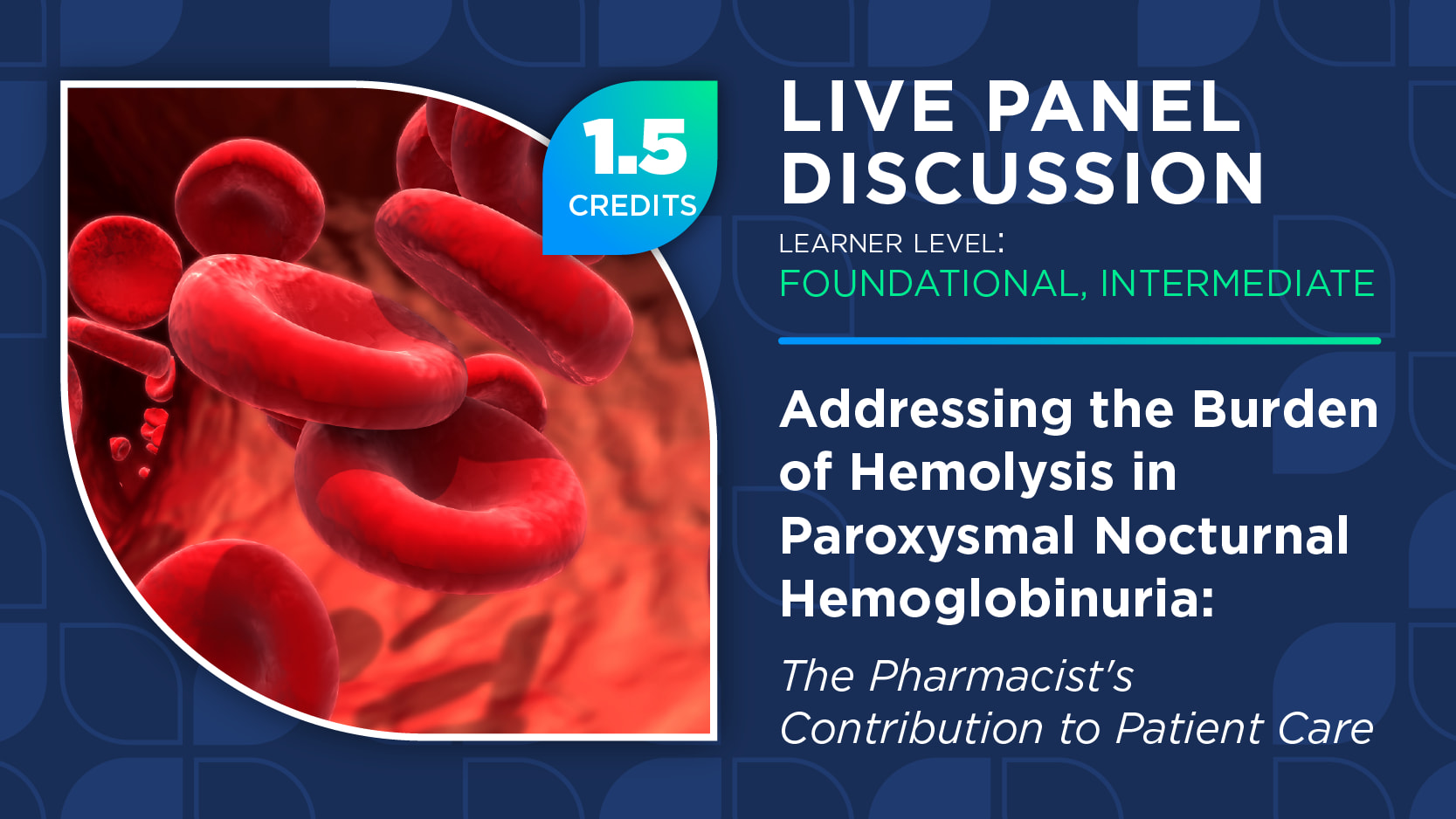
Paroxysmal nocturnal hemoglobinuria (PNH) is a rare, life-threatening blood disorder characterized by the destruction of red blood cells, leading to anemia, thrombosis, and impaired quality of life. Given its significant clinical and economic burden, effective treatment strategies are crucial. To support patients with PNH, pharmacists must be familiar with current standard treatments, including supportive care, as well as the mechanisms of action, efficacy, safety, and real-world data for approved and investigational complement-targeting therapies. Experts leading this panel discussion will provide a review of PNH pathophysiology, clinical presentation, and the evolving landscape of complement-directed therapies. The discussion will emphasize the crucial role of the pharmacist in the multidisciplinary management of PNH to reduce disease burden for patients through approaches that focus on optimizing care, educating patients and prescribers, addressing medication adherence, and navigating safety considerations. This program will feature patient case discussions and a direct interview with an individual living with PNH to provide invaluable insights into the realities of the disease and the impact of treatment on their daily lives.
Target audience: Health-system and specialty pharmacists
Type of activity: Application
Release date: July 30, 2025
Expiration date: September 30, 2025
Time to complete activity: 1.5 hours
Learner level: Foundational, Intermediate
Fee: Free
Educational Objectives
At the completion of this activity, participants will be able to:
- Examine the physical, emotional, and financial impacts of paroxysmal nocturnal hemoglobinuria (PNH) on patients, including complications from hemolysis, thrombosis, and fatigue
- Explore the mechanisms of action of complement inhibitors and their effects on preventing hemolysis and thrombosis in PNH
- Identify best practices for pharmacists in optimizing medication regimens, including dosing, administration, and monitoring of complement inhibitors

Ryan Haumschild, PharmD, MS, MBA
Director of Pharmacy
Emory Healthcare
Winship Cancer Institute
Atlanta, GA

Justin Arnall, PharmD, BCOP
Clinical Coordinator, Hematology
Specialty Pharmacy Service
Atrium Health
Charlotte, NC

Leslie Ward, PharmD, BCPS, BCOP
Clinical Pharmacist, Classical Hematology
UVA Health
Charlottesville, VA

Jamie Koprivnikar, MD
Hematologist
Hackensack University Medical Center
Hackensack, NJ

Pharmacy Times Continuing Education™ is accredited by the Accreditation Council for Pharmacy Education (ACPE) as a provider of continuing pharmacy education. This activity is approved for 1.5 contact hours (0.15 CEU) under the ACPE universal activity number 0290-9999-25-226-L01-P. The activity is available for CE credit through September 30, 2025.
Instructions for Completing the Activity and Receiving CPE Credit
To receive CPE credit, participants must complete the pretest, review the activity in its entirety, complete the posttest, and complete the online activity evaluation. After successful completion of the online activity evaluation, you can submit your credit to CPE Monitor. You may view your credit within 48 hours at www.mycpemonitor.net. All participants must request credit before the activity expiration date. CE credit will not be issued after this date.
Ryan Haumschild, PharmD, MS, MBA; Leslie Ward, PharmD, BCPS, BCOP; and Justin R. Arnall, PharmD, BCOP, have no relevant financial relationships with commercial interests to disclose.
Pharmacy Times Continuing Education™ Planning Staff—Jim Palatine, RPh, MBA; Maryjo Dixon, RPh, MBA; Rose Buszka, PharmD, BCPS, CHCP; Crissy Wilson; Susan Pordon; Brianna Winters; and Chloe Taccetta have no relevant financial relationships with commercial interests to disclose.
At least one anonymous peer reviewer is used as part of content validation and conflict resolution. The peer reviewer has no relevant financial relationships with commercial interests to disclose.
Educational Disclaimer
CPE activities are offered solely for educational purposes and do not constitute any form of professional advice or referral. Discussions concerning drugs, dosages, and procedures may reflect the clinical experience of the author(s) or they may be derived from the professional literature or other sources and may suggest uses that are investigational in nature and not approved labeling or indications. Participants are encouraged to refer to primary references or full prescribing information resources.
For questions about this internet CPE activity, please contact:
[email protected]
Privacy Policy and Terms of Use Information:
www.pharmacytimes.org/terms